A plumbing or HVAC Google Business Profile is the listing people see when the house is hot, wet, or both. The general setup — claim the right listing, do not make a duplicate, match the website — is in the contractor profile guide. This note is the part that is different when the truck is a plumbing truck or a cooling truck. Google changes the product. The official start is still the Google Business Profile site. Nothing here is a promise of a ranking.
Pick a primary category you can defend
The primary category should be the work you want on the phone. Plumber, if the calls you will roll for are leaks, drains, and water heaters. Air conditioning contractor, or the closest true HVAC category the product offers, if the calls are no cool and no heat. A generic "contractor" or "handyman" category hides you from the person who searched the trade and attracts the calls you will decline.
Secondary categories are for work you actually do, not for work you would like to be hired for once. A plumber who replaces a hose bib is not an HVAC company. An HVAC company that clears a condensate line is not a plumber. If the same shop answers both, say so on the website in two named services, and choose the primary category for the calls you want more of. The Lakeland plumbing and HVAC page is that split. Extra categories are how you spend the afternoon quoting jobs you do not run a truck for.
If you are still choosing the company name, do that before you claim the profile. The Texas plumbing start guide and the Florida HVAC start guide cover the filing office and the license check. The profile should not go live under a name the state will reject.
Services are symptoms, not a catalog
Add services a customer would say. No cool air. No heat. Water heater. Clogged drain. Condensate leak. Leak detection, if you do it. Leave off the brand list and the twenty-item menu copied from a manufacturer. A person with water on the floor is scanning for a sign you handle that failure in their town.
Match the services to the page. If the profile lists sewer replacement and the website does not, you will get a call you did not prepare for, or a visitor who thinks the listing is a template. If you do not do new construction, do not add it because the field was empty. Empty is allowed. Wrong is how the review happens.
The description should repeat the real offer in plain language. Towns, the failures, and the license number if your state expects customers to check it. Do not stuff every suburb into the paragraph. Do not write about passion. Two or three sentences a tired person can read on a phone are the whole box. The Orlando HVAC guide is an example of the sentences that belong there: no-cool calls, the side of the metro, and a diagnosis before a change-out.
Hours are a promise about the phone
Set the hours to the hours a person can reach a human. If you answer until 6, do not publish 8. If you do not work Sundays, say so. Emergency plumbing and after-hours no-cool calls are real offers for some shops and a lie for others. Publish 24 hours only if someone answers at 1 a.m. and the truck can roll. A listing that looks open and a voicemail that says you open at 8 is a one-star review you scheduled.
Special hours for holidays are worth setting. A closed week that looks open is worse than a quiet listing. If you take no-heat calls in a cold snap and you are a Florida shop that rarely does, say the actual rule. The winter HVAC note is how the website and the hours should agree when the call is heat.
The missed-call calculator prices the rings you miss while you are under a sink or in an attic. A form on the site is the backup. The profile is not a dispatch service. The request still needs a row in a list you will see. The free CRM note is that list.
The service area is the route
List the cities you already serve. Leave off the far suburb that makes you late. An Orlando company that does not drive to Kissimmee should not draw a ring that includes it. A Polk County electrician or a combined shop should say Lakeland and Winter Haven instead of borrowing Tampa's name. The same rule is on the website. When the profile and the page disagree, people believe neither.
If you work at the customer's location and you do not want the public at your house, use a service-area business and follow Google's current rules for the address. Do not invent a virtual office. Do not pin the pin on a supply house you do not occupy. The careful customer notices, and the platform does too.
Photos from the climate you work in
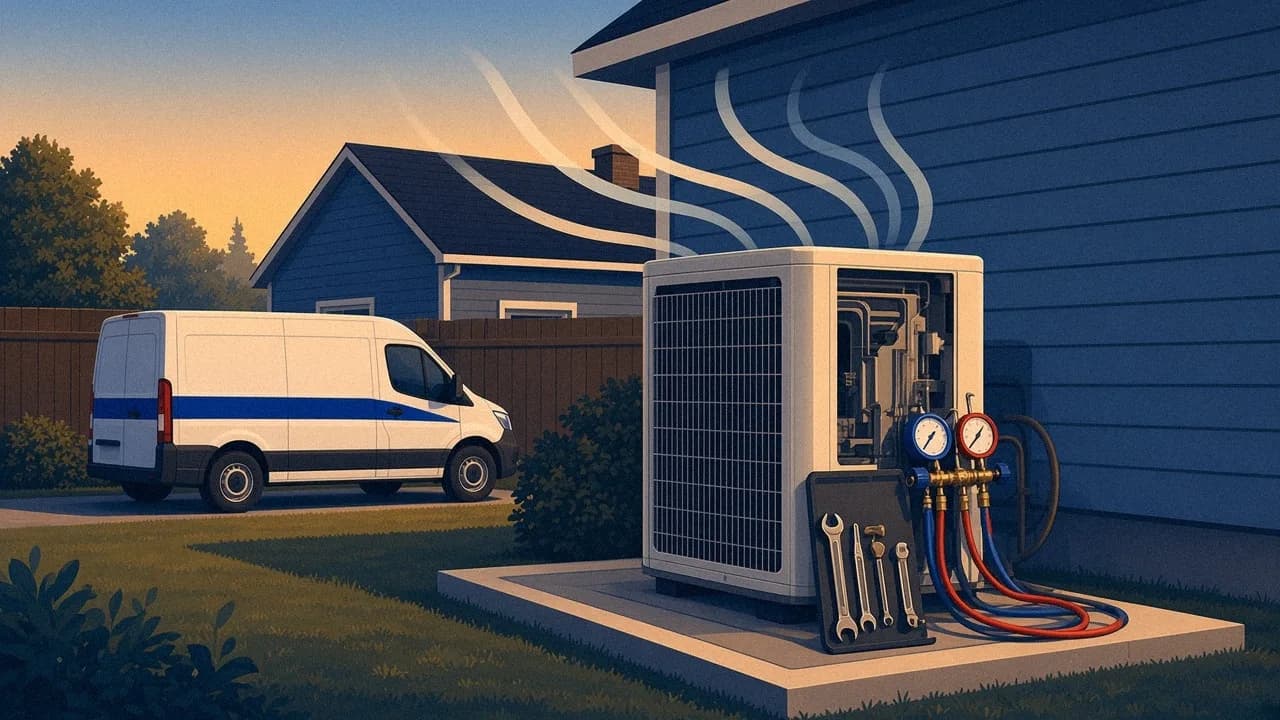
A condenser in a July backyard, a water heater in a garage that looks like your city, a panel you are allowed to show. Faces of customers only with permission. License plates and house numbers are a privacy choice. Stock photos of a van in another season are obvious, and they are common on HVAC listings that were written for furnaces in a state that has a winter.
Add photos after jobs, a few at a time. Ten true pictures beat a single afternoon of the same driveway. Tile underlayment is a roofing photo. An attic air handler is an Orlando or a Phoenix photo. A boiler in a walk-up is a different city. If the picture could be anywhere, it will not help the person who lives somewhere specific.
Reviews that name the failure
Ask after a finished job. Ask them to mention the neighborhood and what you fixed. "No cool air in College Park" is useful. "Best HVAC in the state" is not, and you should not ask them to write the second one. Do not write the review, do not offer a discount for stars, and do not buy them. The review note is the full habit. A new listing with twenty reviews in an hour looks purchased. A listing that gains a review when a job finishes looks like a company.
Reply without pasting the diagnosis or the address. If the review describes a city you do not serve, say so calmly. Then shrink the service area so the next review is not a surprise.
The website field is a page you control
Put a URL you own in the website field. A social profile is a weak substitute, because the visitor cannot see the refusals and the form in one place. A free ServiceBase site is built for the trade, the city, the phone, and a quote request that stays on your list. Create it and use that URL. What that page costs, and what it does not include, is in the website cost note.
Posts on the profile are optional. "Booking no-cool diagnostics this week" is useful in July. "Happy Monday" is not. If you will not keep the habit, skip the posts and keep the hours and the photos current. Stale holiday hours do more harm than a quiet listing.
A monthly check from the truck
Open the listing on a phone. Confirm the name, the category, the phone, the hours, and the website. Tap the website and confirm it shows the same phone. Read new reviews and reply. If you dropped a city, drop it on the page the same day. If you added sewer work or change-outs, add them in both places only if the license covers them. The profile will not file that license. The state page will tell you whether you have it.
If Google asks you to re-verify, do it before you post more often. An unclaimed or suspended listing does not get fixed by a busier content calendar. The general guide covers duplicates and claiming. Use it if you are not sure the listing you are editing is the one the customer sees. Then make the category, the hours, and the towns boringly true. That is the tip that holds up after the product changes.