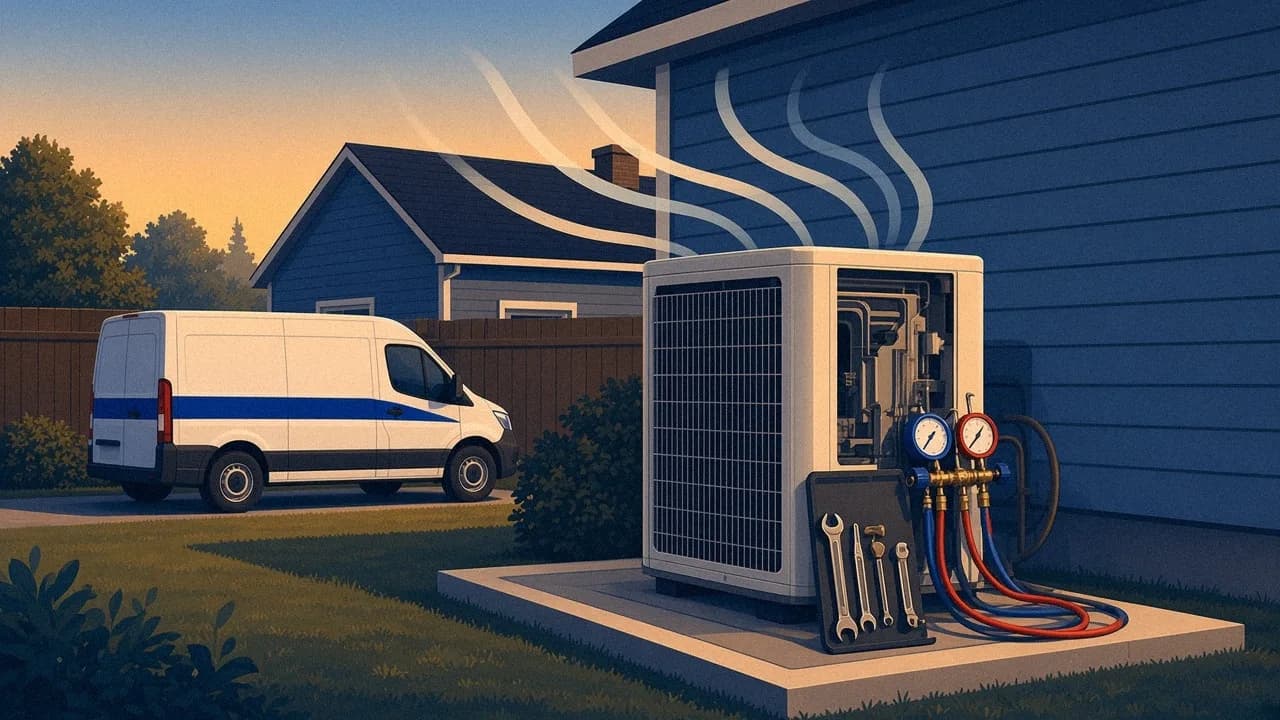
A free HVAC website in St. Louis, MO is a specific page for a HVAC tech who wants the next customer to understand the work, the towns, and how to ask for a quote. It is not a slogan with a city dropped in.
What customers in this city are hiring
Heating carries the winter and cooling is no longer optional in a remodel. Basements and older ductwork change the diagnosis. Split repair from replacement on the page. In St. Louis, the housing decides the visit: brick houses and basements in the city and close-in suburbs, with a separate newer stock in St. Charles. The weather on the truck is humid summers, cold winters, ice, tornado and hail risk, and clay that moves with moisture. Central West End, Soulard, and Clayton are worth naming only when they are real stops. Kirkwood and St. Charles are a different drive until you can reach them the same day. City of St. Louis permits is the local counter to ask when the job needs a permit or a city registration. This page names that office. It does not invent a fee. The Illinois side of the metro is a different state license. This page is about the Missouri side: the city, Clayton, Kirkwood, and St. Charles. Do not imply one license covers both banks of the river. City customers want a crew that can work an old brick house. Suburban customers want a crew that shows up inside a normal window. Those are different promises.
Equipment location follows the house. brick houses and basements in the city and close-in suburbs, with a separate newer stock in St. Charles Around St. Louis, humid summers, cold winters, ice, tornado and hail risk, and clay that moves with moisture. That is why a heating headline and a cooling headline are not interchangeable, and why a tune-up offer is the wrong first sentence in the season when the house is actually uncomfortable.
No-cool or no-heat diagnosis, the repair, and a replacement only after you have seen the equipment. In St. Louis, MO, list Central West End and St. Charles together only if one crew really covers both.
What the website needs
Say the local job in the hero
No-cool or no-heat diagnosis, the repair, and a replacement only after you have seen the equipment. In St. Louis, MO, list Central West End and St. Charles together only if one crew really covers both. That line belongs above the fold on a HVAC page for St. Louis, MO, not buried under a company story. Central West End, Soulard, and Clayton are useful only if they are on the route.
Lead with the symptom
No cooling, no heat, weak airflow, and a system that short-cycles are the searches. Brand names can wait. In St. Louis, tie it to how people hire: City customers want a crew that can work an old brick house. Suburban customers want a crew that shows up inside a normal window. Those are different promises.
Publish a true service area
List Central West End, Soulard, Clayton, Kirkwood, St. Charles only where you will go. City of St. Louis permits should be mentioned when the job is permitted. A map of the whole state tells a St. Louis customer you are a call center.
Separate repair from replacement
Tell people you diagnose first. A page that only offers new systems attracts the wrong argument. Heating carries the winter and cooling is no longer optional in a remodel.
Questions from owners
What should a free HVAC website in St. Louis, MO include?
A headline with the real work, a phone number, and a service area written as places. No-cool or no-heat diagnosis, the repair, and a replacement only after you have seen the equipment. In St. Louis, MO, list Central West End and St. Charles together only if one crew really covers both. Add photos of your own jobs and a form that asks for the detail you need before you drive to Central West End. Attic, closet, roof, basement, or crawl space changes the job. Name the one that is common in your city. City of St. Louis permits belongs on the page when a permit is part of the job.
Why do hvac customers in St. Louis ignore generic websites?
Heating carries the winter and cooling is no longer optional in a remodel. Basements and older ductwork change the diagnosis. Split repair from replacement on the page. In St. Louis, the housing decides the visit: brick houses and basements in the city and close-in suburbs, with a separate newer stock in St. Charles. The weather on the truck is humid summers, cold winters, ice, tornado and hail risk, and clay that moves with moisture. Central West End, Soulard, and Clayton are worth naming only when they are real stops. Kirkwood and St. Charles are a different drive until you can reach them the same day. City of St. Louis permits is the local counter to ask when the job needs a permit or a city registration. This page names that office. It does not invent a fee. The Illinois side of the metro is a different state license. This page is about the Missouri side: the city, Clayton, Kirkwood, and St. Charles. Do not imply one license covers both banks of the river. City customers want a crew that can work an old brick house. Suburban customers want a crew that shows up inside a normal window. Those are different promises. Equipment location follows the house. brick houses and basements in the city and close-in suburbs, with a separate newer stock in St. Charles Around St. Louis, humid summers, cold winters, ice, tornado and hail risk, and clay that moves with moisture. That is why a heating headline and a cooling headline are not interchangeable, and why a tune-up offer is the wrong first sentence in the season when the house is actually uncomfortable. Someone in Soulard can tell the difference between that and a page that only swapped the city name.
Can a HVAC in St. Louis get leads without buying ads?
City customers want a crew that can work an old brick house. Suburban customers want a crew that shows up inside a normal window. Those are different promises. A site you control will not outspend a national lead vendor. It gives the customer who refuses those forms a place to check your service area and send the job. No-cool or no-heat diagnosis, the repair, and a replacement only after you have seen the equipment. In St. Louis, MO, list Central West End and St. Charles together only if one crew really covers both. The request stays on your list instead of being sold to several trucks.
What should the quote form ask a HVAC tech customer in St. Louis, MO?
Tell people you diagnose first. A page that only offers new systems attracts the wrong argument. In St. Louis, also ask which part of town, because Central West End and St. Charles are not the same drive. You can decline the job. You cannot unsend a vague visit.
Is a free HVAC website enough, or do I need a bigger marketing site?
Enough to be found for the work you want in St. Louis and to catch the request. It is not a substitute for a license, insurance, reviews, or a crew that shows up. ServiceBase publishes the page from your trade, city, and services, and files quote requests in one list. Custom domains and ad campaigns are not part of this version. City customers want a crew that can work an old brick house.