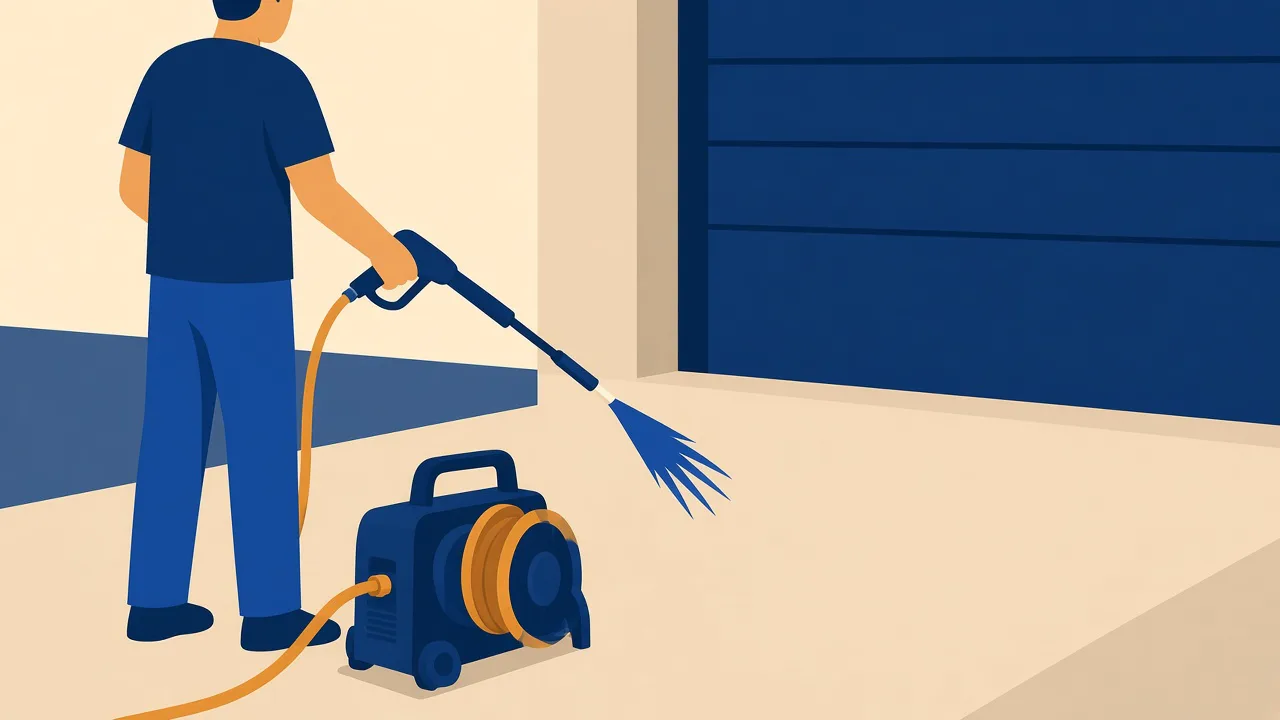
A pressure washing business is a truck, a wand, and a promise that the water goes somewhere legal. The romantic version is a wrapped trailer and a "we wash anything" line on a flyer. The version that is still around next summer is smaller. You wash the surfaces you understand, you have asked the city about the runoff, and a stranger can tell what you will not blast.
This is not legal, tax, or insurance advice. Boards and stormwater rules change by state and by city. Read the official pages. The start checklist puts the IRS EIN, the SBA structure guide, and the state filing or licensing office we could verify in one place. Use it. Do not pay a company to get you an employer identification number. The IRS issues that number at no charge.
Pick the surface before you pick the logo
Driveways, house washes, fences, and flatwork are different pressures and different ways to damage a property. Wood, soft stone, and roofs are how a new washer creates a claim. Leave them off the menu until you have read the license board and you can control the water. A single "we wash anything" sentence attracts the job you should have refused.
Start with concrete you can finish in one stop: driveways, walks, and patios. Add a house wash when you can keep the spray out of open windows and out from behind siding. If a customer asks for a roof, the honest answer is that roof cleaning can be a different classification from a driveway route. Read the contractor board in your state before you print the word. The power washing website guide is the checklist for what the public page has to say once you know the limit.
Climate is not decoration. Humidity grows mildew on siding. Dry cities cake dust onto block and concrete. Salt stains show up after winter or near a coast. A page written for the other climate is obvious to the person who lives there. City guides such as Phoenix, Houston, and Portland are examples of how the film and the housing change the offer. Copy the shape. Do not copy a service area you do not drive.
Wash water is a city question
The license and the drain are separate problems. EPA's page on the lead Renovation, Repair, and Painting rule says pressure washing is not prohibited when that rule applies, and that the firm has to isolate the work area so dust and wastewater stay in it. That rule is for renovations the lead rule covers, not for every driveway. Separately, a construction site can fall under a stormwater permit with its own conditions on soaps and detergents. A house route that is not one of those jobs is still a city question.
Ask the public-works or stormwater office whether your wash water may enter a storm drain. Write down the name of the person and the answer. Put a sentence on your page that you ask. Customers who have watched a neighbor's runoff hit the street will hire the company that already knows the rule exists. The state guides under how to start a power washing business link the EPA pages we could verify. They do not invent a local fee.
Name, entity, and the free EIN
Search the business name at the state filing office before you order magnets. Use the same spelling on the invoice, the trailer, and the voicemail. A sole proprietorship can be you, under your own name, with no formation filing. An LLC is a state filing and a separate company on paper. It does not license you, and it does not decide where the water may go. Form the LLC when you are taking deposits, hiring, or putting the insurance in a company name. If you are unsure, ask an accountant before you pay a filing fee.
Where we could verify an LLC fee from an official page, the state guide prints it. Texas, Florida, California, and New York are examples. Everywhere else, the fee stays on the state's own site. Do not trust a blog number for a state we did not read. Get the EIN from the IRS page if you want the number yourself. A bank will usually ask for your ID, the EIN or your Social Security number, and the formation papers if you filed.
Insurance before the wand points at a house
General liability belongs in place before the first paid driveway. Tell the insurer you pressure-wash, and name the surfaces, so a claim is not denied for work you did not disclose. Water forced behind siding or into an open window is the ordinary loss. Ask whether the policy speaks to that. Commercial auto matters if the truck or trailer is how you work, because a personal auto policy often excludes business use. Workers' compensation is a state program. Before anyone works with you, including a friend, ask an insurer and the state labor office whether you must carry it. Do not copy a headcount from another state.
A property manager will ask for the certificate before the first job. Keep a PDF you can send the same day. The certificate does not replace the conversation about wash water.
Price the visit you can repeat
Write three prices before you need them in a driveway. One for flatwork, one for a house wash, and one for the surface you will not do. Include the time to control the water. A quote that assumes the runoff can run to the street is incomplete until the city has said so. Mildew, dust, and salt stain take different time. A price copied from a video shot in another climate will be wrong.
The job pricing calculator turns your monthly overhead, the pay you want, and the hours you can actually bill into an hourly rate, then a price for the job in front of you. It does not look up a national average. It uses the numbers you type. Add materials, fuel, and dump or disposal fees on that job so they are not hiding inside a "per square foot" number you saw online. Adjust the three prices after ten real houses, and do not promise the film will never come back.
Be reachable, then be findable
Answer the phone. A missed call during a house wash is a job that called the next truck. The missed-call calculator shows what those rings are worth from your own close rate and your own average ticket. It is not an industry statistic. If the number stings, put a tap-to-call number at the top of the page and a form that still works when you are on a ladder.
Claim the Google Business Profile in the business name, with the hours you actually answer and a service area made of towns you drive. Photos should be driveways and siding you have washed in this climate. Ask for a review after a clean visit, and ask the customer to name the neighborhood and the surface. A review that says "great job" does not help the next person in a different part of town.
Publish a one-page site that splits flatwork from house washes, names the surfaces you refuse, and says you ask the city about wash water. The form should ask for the surface and the rough size. Create the free site when the name and the phone are real. ServiceBase keeps the quote requests in a list. It does not file the LLC, buy the insurance, or make the discharge legal.
The first month
Sell the stops you can finish without forcing water into a wall. Cluster them. A route of three driveways in one subdivision beats a heroic drive across the metro for a single patio. Say no to the roof, the deck you do not understand, and the customer who wants a price before you know the surface. The refusals are the business. The city guides are there when you want the page to sound like the place you work, not like a template with the city name swapped in.